
HOYA’s MiYOSMART iQ has arrived in Canada, putting another myopia-control spectacle lens on the radar of U.S. optometrists. For American practices already discussing Essilor Stellest with families, the news raises a reasonable question: could HOYA’s next-generation lens eventually become another domestic option?
The present distinction is clear: Canada has a MiYOSMART iQ launch; that does not establish a U.S. launch. HOYA’s current product notices state that MiYOSMART and MiYOSMART iQ are not approved or available for sale in the United States. This report reflects information checked October 23, 2026. Source: HOYA’s Canadian launch announcement.
What launched in Canada?
HOYA announced the Canadian introduction on July 30, 2026. The original MiYOSMART dates to 2018; iQ is a newer design within that product family, rather than the first appearance of MiYOSMART. Both versions remain in the Canadian portfolio. HOYA’s announcement distinguishes the two products.
HOYA also reported a national launch event attended by eye care professionals from across Ontario, with educational sessions about myopia management and the new lens. The company’s post confirms the event, but does not specify its date or venue. Source: HOYA Vision Care’s event recap.
How is MiYOSMART iQ different?
The original lens uses Defocus Incorporated Multiple Segments, or DIMS, to combine refractive correction with myopic defocus. HOYA describes iQ’s Triple Enhanced Design as bringing treatment segments closer to the lens center, increasing defocus power, and expanding the treatment zone. The intended result is a stronger and more consistently delivered treatment signal. These are the manufacturer’s design explanations, not proof of superiority over every competing lens. Source: Canadian product introduction.
What do the early clinical results show?
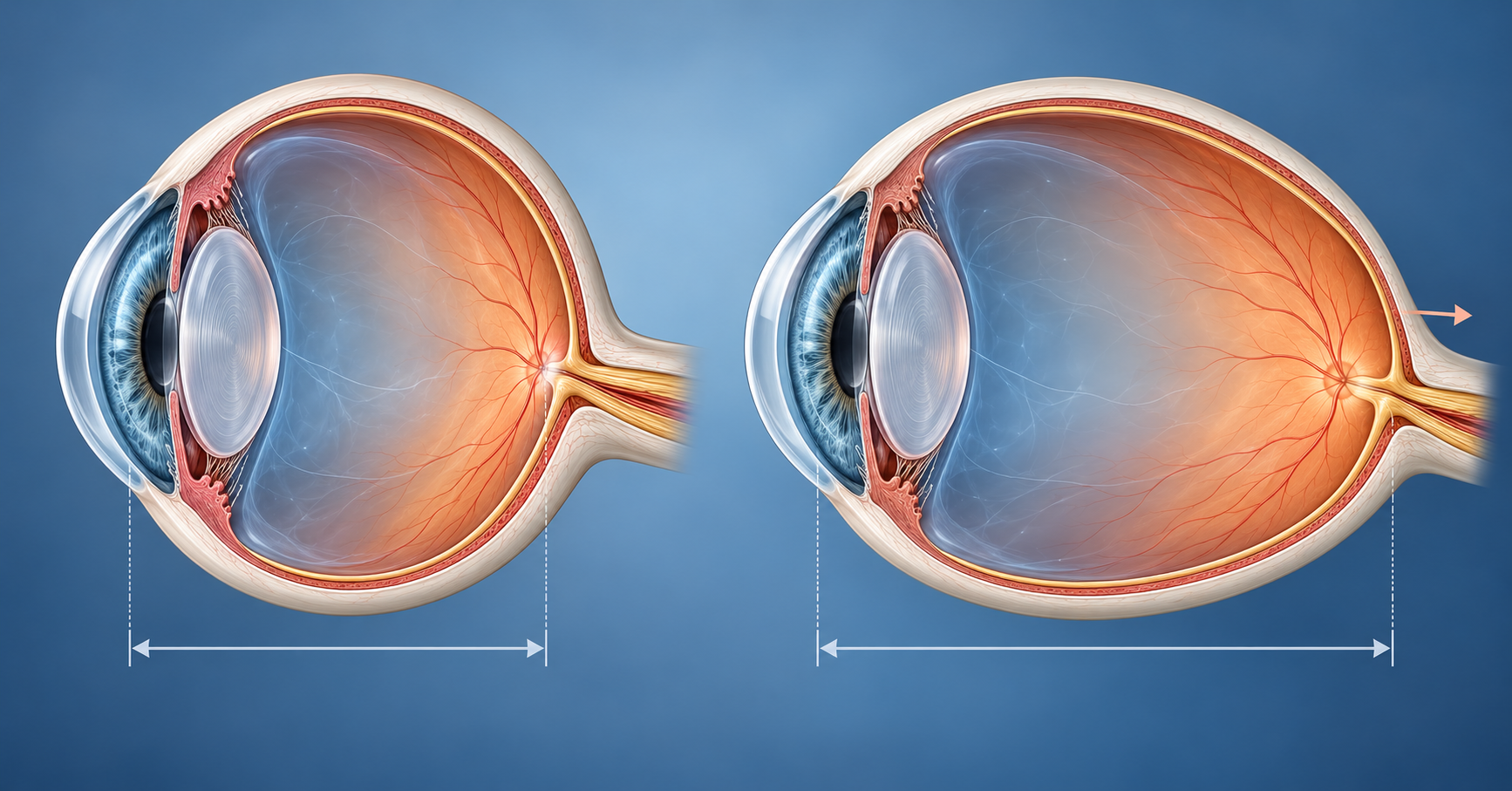
In its May 2026 ARVO report, HOYA described a randomized trial with 196 Hong Kong children aged 4–12 who completed the study. At 12 months, the reported mean spherical equivalent change was +0.046 D with iQ versus −0.534 D with single-vision lenses. Mean axial elongation was 0.075 mm versus 0.346 mm. These are group averages over one year, not a prediction for an individual child. Source: HOYA’s ARVO evidence report.
The same report uses “9 out of 10” language about halting clinically relevant progression. Its footnote applies a −0.50 D threshold over 12 months. That threshold-based claim should not be read as saying that 90% of children had absolutely no refractive change or eye growth. Likewise, percentage efficacy above 100% reflects the comparison of mean refractive changes; it does not establish a cure or permanent reversal of myopia. The report cites conference abstracts and manufacturer data on file, which readers should distinguish from a full peer-reviewed trial publication. Read the underlying report and references.
Why Stellest makes this relevant to U.S. practices
On September 25, 2025, the FDA authorized marketing of Essilor Stellest to correct myopia, with or without astigmatism, and slow progression in children aged 6–12 at treatment initiation. The authorization gives American clinicians a concrete example of a myopia-control spectacle lens entering the U.S. regulatory framework. It does not confer authorization on HOYA’s products or establish their future timing. Source: FDA announcement.
Practices should also resist ranking iQ and Stellest by placing percentages from separate studies side by side. Different ages, baseline characteristics, control groups, wear patterns, and observation periods can change the apparent treatment effect. A comparative claim needs evidence that supports that particular comparison.
What should optometrists watch next?
- U.S. regulatory and commercial announcements: look for a confirmed indication and actual availability before discussing domestic prescribing.
- Longer follow-up: assess whether the early results persist, alongside safety, visual performance, adherence, and discontinuation outcomes.
- Full trial reporting: examine enrollment, allocation, losses to follow-up, age-specific outcomes, and the methods behind refractive and axial-length measurements.
- Practice implementation: if U.S. availability changes, verify fitting requirements, training, pricing, and follow-up guidance rather than assuming Canadian arrangements apply.
For now, MiYOSMART iQ is a development worth following and discussing accurately with families. A useful explanation is that HOYA has introduced a new lens in Canada, while American treatment decisions must remain grounded in options available here and each child’s examination.
For related practice planning, read our guide to axial-length instruments, costs, and billing considerations.
This article provides professional news and education. Individual myopia-management decisions require an eye examination and clinical judgment.